Artificial intelligence (AI), in its broadest sense, is intelligence exhibited by machines, particularly computer systems. It is a field of research in computer science that develops and studies methods and software which enable machines to perceive their environment and uses learning and intelligence to take actions that maximize their chances of achieving defined goals. Such machines may be called AIs.
AI technology is widely used throughout industry, government, and science. Some high-profile applications include advanced web search engines (e.g., Google Search); recommendation systems (used by YouTube, Amazon, and Netflix); interacting via human speech (e.g., Google Assistant, Siri, and Alexa); autonomous vehicles (e.g., Waymo); generative and creative tools (e.g., ChatGPT and AI art); and superhuman play and analysis in strategy games (e.g., chess and Go). However, many AI applications are not perceived as AI: “A lot of cutting edge AI has filtered into general applications, often without being called AI because once something becomes useful enough and common enough it’s not labeled AI anymore.”
Alan Turing was the first person to conduct substantial research in the field that he called machine intelligence. Artificial intelligence was founded as an academic discipline in 1956. The field went through multiple cycles of optimism, followed by periods of disappointment and loss of funding, known as AI winter. Funding and interest vastly increased after 2012 when deep learning surpassed all previous AI techniques, and after 2017 with the transformer architecture. This led to the AI boom of the early 2020s, with companies, universities, and laboratories overwhelmingly based in the United States pioneering significant advances in artificial intelligence.
The growing use of artificial intelligence in the 21st century is influencing a societal and economic shift towards increased automation, data-driven decision-making, and the integration of AI systems into various economic sectors and areas of life, impacting job markets, healthcare, government, industry, and education. This raises questions about the long-term effects, ethical implications, and risks of AI, prompting discussions about regulatory policies to ensure the safety and benefits of the technology.
Goals
The general problem of simulating (or creating) intelligence has been broken into sub-problems. These consist of particular traits or capabilities that researchers expect an intelligent system to display. The traits described below have received the most attention and cover the scope of AI research.
Reasoning and problem solving
Early researchers developed algorithms that imitated step-by-step reasoning that humans use when they solve puzzles or make logical deductions. By the late 1980s and 1990s, methods were developed for dealing with uncertain or incomplete information, employing concepts from probability and economics.
Many of these algorithms are insufficient for solving large reasoning problems because they experience a “combinatorial explosion”: they became exponentially slower as the problems grew larger. Even humans rarely use the step-by-step deduction that early AI research could model. They solve most of their problems using fast, intuitive judgments. Accurate and efficient reasoning is an unsolved problem.
Knowledge representation
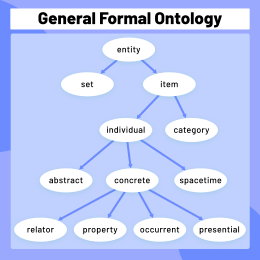
Knowledge representation and knowledge engineering allow AI programs to answer questions intelligently and make deductions about real-world facts. Formal knowledge representations are used in content-based indexing and retrieval, scene interpretation, clinical decision support, knowledge discovery (mining “interesting” and actionable inferences from large databases), and other areas.
A knowledge base is a body of knowledge represented in a form that can be used by a program. An ontology is the set of objects, relations, concepts, and properties used by a particular domain of knowledge. Knowledge bases need to represent things such as: objects, properties, categories and relations between objects; situations, events, states and time; causes and effects, knowledge about knowledge (what we know about what other people know); default reasoning (things that humans assume are true until they are told differently and will remain true even when other facts are changing); and many other aspects and domains of knowledge.
Among the most difficult problems in knowledge representation are: the breadth of commonsense knowledge (the set of atomic facts that the average person knows is enormous); and the sub-symbolic form of most commonsense knowledge (much of what people know is not represented as “facts” or “statements” that they could express verbally).There is also the difficulty of knowledge acquisition, the problem of obtaining knowledge for AI applications.
Social intelligence
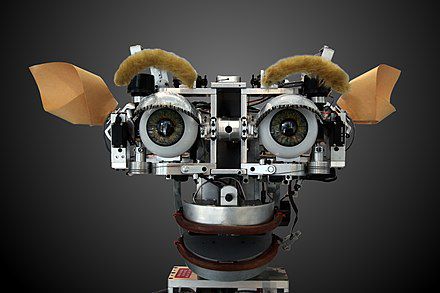
Affective computing is an interdisciplinary umbrella that comprises systems that recognize, interpret, process or simulate human feeling, emotion and mood. For example, some virtual assistants are programmed to speak conversationally or even to banter humorously; it makes them appear more sensitive to the emotional dynamics of human interaction, or to otherwise facilitate human–computer interaction.
However, this tends to give naïve users an unrealistic conception of the intelligence of existing computer agents. Moderate successes related to affective computing include textual sentiment analysis and, more recently, multimodal sentiment analysis, wherein AI classifies the affects displayed by a videotaped subject.
General intelligence
A machine with artificial general intelligence should be able to solve a wide variety of problems with breadth and versatility similar to human intelligence.
Learning
Machine learning is the study of programs that can improve their performance on a given task automatically. It has been a part of AI from the beginning.
There are several kinds of machine learning. Unsupervised learning analyzes a stream of data and finds patterns and makes predictions without any other guidance. Supervised learning requires a human to label the input data first, and comes in two main varieties: classification (where the program must learn to predict what category the input belongs in) and regression (where the program must deduce a numeric function based on numeric input).
In reinforcement learning the agent is rewarded for good responses and punished for bad ones. The agent learns to choose responses that are classified as “good”. Transfer learning is when the knowledge gained from one problem is applied to a new problem. Deep learning is a type of machine learning that runs inputs through biologically inspired artificial neural networks for all of these types of learning.
Computational learning theory can assess learners by computational complexity, by sample complexity (how much data is required), or by other notions of optimization.
 Site Title